- Veterinary PCD & Third Party Pharma Manufacturing Company in India
- +91 9034925440
- vetsonhealthcare@gmail.com


Veterinary Feed Supplements Manufacturer

Animal Pharmaceutical Companies in Modern Vetsonhealthcare
December 13, 2025
Animal Feed Supplement Manufacturers in India
December 30, 2025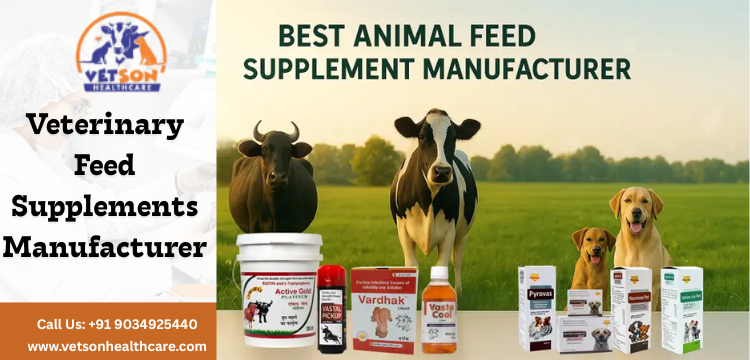
In the modern era of agriculture and pet care, the focus has shifted from mere survival to optimal performance and wellness. Whether it is a high-yielding dairy farm, a commercial poultry setup, or a household with a beloved canine companion, the quality of nutrition provided to animals dictates their health, longevity, and productivity. While traditional fodder and grains provide the caloric foundation, they often fall short of meeting the complex micronutrient requirements of different species. This is where the specialized expertise of a veterinary feed supplements manufacturer becomes the bridge between basic feeding and precision nutrition.
The Science of Animal Feed Supplements
The biological needs of animals are as diverse as the species themselves. A cow producing 30 liters of milk daily has vastly different nutritional requirements compared to a broiler chicken intended for meat production. Feed supplements are concentrated sources of nutrients—such as vitamins, minerals, amino acids, and enzymes—designed to be added to the primary diet.
The primary goal is to address “nutritional gaps.” Modern soil depletion often means that the grass or grain grown in specific regions lacks essential minerals like Selenium, Zinc, or Magnesium. Without these, animals may suffer from poor immunity, reproductive failures, or stunted growth. A professional veterinary feed supplements manufacturer utilizes advanced biochemical research to formulate products that replenish these missing links, ensuring the animal’s metabolic pathways function at their peak.
Why Quality Manufacturing is Non-Negotiable
Not all supplements are created equal. The efficacy of a supplement depends entirely on its bioavailability—the ease with which an animal’s body can absorb and utilize the nutrients. In this evolving landscape, the role of a veterinary feed supplements manufacturer has become more critical than ever, as they must balance cost-effectiveness with scientific integrity.
Sourcing and Purity
The process begins with raw material selection. High-quality manufacturers ensure that their minerals are “chelated” (bound to organic molecules) to improve absorption. They also conduct rigorous testing for heavy metals like lead or arsenic, which can inadvertently enter the food chain if low-grade raw materials are used.
The Role of Technology in Production
Modern manufacturing facilities employ sophisticated mixing and pelleting technologies. Uniform distribution is vital; in a ton of feed, a few grams of a specific vitamin must be evenly dispersed so that every animal receives its intended dose. A reputable veterinary feed supplements manufacturer ensures that every batch is tested for consistency and stability, guaranteeing that the nutrients don’t degrade before they reach the farm.
Categorizing Supplements: Targeted Solutions for Every Species
To understand the impact of these products, we must look at how they are applied across different sectors of the animal industry.
1. Ruminant Nutrition (Cattle, Sheep, and Goats)
In dairy farming, the focus is on rumen health and milk solids. Supplements often include bypass fats and proteins that escape the rumen to be absorbed directly in the intestine. Mineral mixtures play a huge role in preventing “milk fever” and ensuring a smooth transition during the calving period.
2. Poultry Excellence
The poultry industry operates on thin margins and high turnover. Supplements here are geared toward skeletal strength (to support rapid weight gain in broilers) and eggshell quality (in layers). Enzymes are frequently added to help birds digest phosphorus and fiber more efficiently, reducing both cost and environmental waste.
3. The Rise of Companion Animal Wellness
The “pet humanization” trend has led to a surge in demand for high-end supplements for dogs and cats. From joint support (Glucosamine and Chondroitin) to skin and coat health (Omega-3 fatty acids), owners are now looking for preventive healthcare solutions that mirror human wellness trends.
The Economic Impact: ROI for Farmers and Owners
Investing in supplements is often seen as an additional expense, but the return on investment (ROI) is significant. By partnering with a leading veterinary feed supplements manufacturer, farmers can witness a dramatic reduction in veterinary bills and mortality rates.
When animals are nutritionally satiated, their immune systems are robust. This means they are less susceptible to infections, reducing the need for expensive antibiotic treatments. In livestock, better nutrition translates to higher milk yields, faster weight gain, and better reproductive cycles. For pet owners, it means fewer trips to the vet for chronic conditions like dermatitis or arthritis, ultimately saving money while improving the animal’s quality of life.
Sustainability and the “One Health” Approach
The global health community is increasingly focusing on the “One Health” concept—the idea that human, animal, and environmental health are interconnected. How we feed our animals directly impacts the environment. For example, specific feed additives can reduce methane emissions from cattle, contributing to the fight against climate change.
Furthermore, by using enzymes that improve feed digestibility, manufacturers help reduce the amount of nitrogen and phosphorus excreted in manure, which prevents the contamination of local water sources. As a forward-thinking veterinary feed supplements manufacturer, companies are now focusing on sustainable sourcing and eco-friendly packaging to align with global environmental goals.
The Future: Precision Nutrition and Digital Integration
The future of the industry lies in personalization. We are moving away from “one-size-fits-all” supplements toward precision nutrition. This involves analyzing the specific blood profiles or genetic markers of a herd and creating custom-blended supplements to meet their exact needs.
We are also seeing the integration of digital tools. Farmers can now use sensors to monitor animal behavior and health in real-time, allowing them to adjust supplement dosages dynamically. When searching for a reliable veterinary feed supplements manufacturer, one must look for those who are investing in this kind of innovation, as they will lead the next wave of animal healthcare.
Conclusion
The journey from a laboratory concept to a healthy, thriving animal is a complex one. Veterinary feed supplements manufacturer are no longer “optional extras”; they are fundamental components of a modern, responsible, and profitable animal care strategy. By ensuring that animals receive the precise balance of vitamins, minerals, and functional additives, we are not only supporting their well-being but also securing a healthier food chain for ourselves. Choosing a manufacturer that prioritizes science, transparency, and quality control is the most important decision a farmer or pet owner can make for their animals’ future.
❓ Frequently Asked Questions (FAQs)
1. Can I use human supplements for my animals?
No, you should never give human supplements to animals. Animals have different metabolic rates and toxicities; for example, certain sweeteners or dosages found in human products can be lethal to pets. Always use products specifically formulated by a certified manufacturer for that specific species.
2. How long does it take to see results from feed supplements?
The timeline varies depending on the goal. For energy-boosting or digestive supplements, you might see changes within a week. However, for structural changes like coat quality, joint health, or skeletal growth, it typically takes 4 to 8 weeks of consistent use to see a visible difference.
3. Are feed supplements a replacement for a balanced diet?
Supplements are intended to “supplement” or complete the diet, not replace it. The bulk of an animal’s energy should still come from high-quality forage, grains, or balanced commercial feed. Supplements ensure that the micronutrient levels are optimal, which basic feed alone cannot always guarantee.